Key assessment
An informative schedule connects each date to an accepted configuration and an experimental objective, not just an optimistic label.
Read the baseline as a sequence of capabilities
ITER described its revised baseline in July 2024, including a proposed deuterium-tritium phase beginning in 2039. Its technical-report programme includes an updated research plan dated May 2025. These are programme statements with a scientific mission, not a promise that an ITER electricity product will become available to consumers on that date. The relevant comparison is between staged experimental capabilities.
This March-April 2026 review uses those documents as its baseline. It deliberately avoids carrying forward the superseded 2025 first-plasma date as though it were current. A technically useful account must identify which version of the schedule it is using and what has changed, rather than combining dates from different plans into one apparently consistent roadmap.
Sources: [1] ITER: revised baseline explanation, July 2024 · [2] ITER: technical reports and May 2025 research plan
An operating point is more than assembled hardware
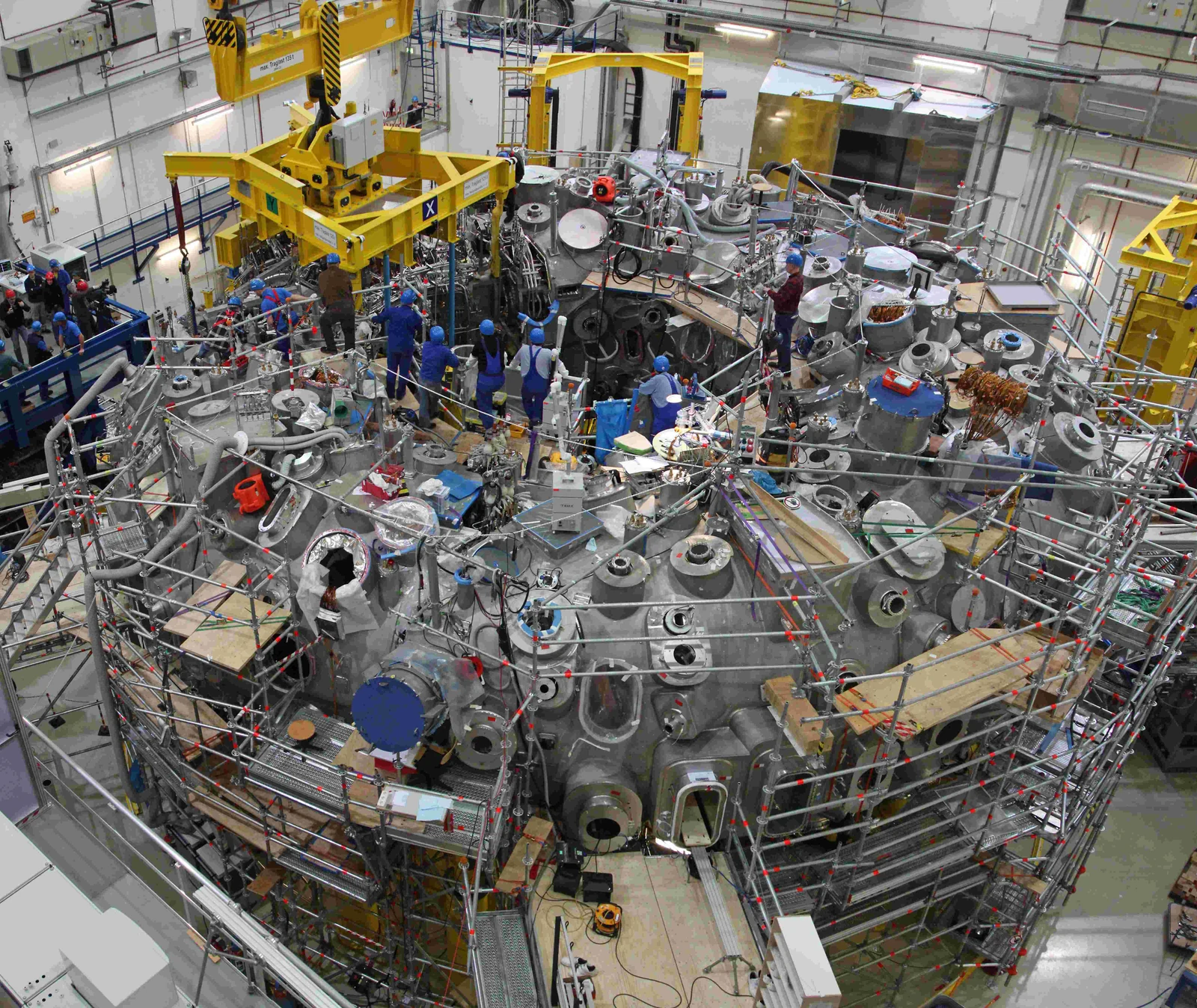
A machine can be physically assembled before its measurement, control, protection and operational procedures are ready for the intended experiment. Commissioning converts installed equipment into an understood system. It identifies interfaces, calibration issues and off-normal behaviour that are difficult to resolve on paper. Readiness should therefore be defined by acceptance evidence, not visual completion.
We would track installed, commissioned, qualified and experimentally demonstrated states separately. Each transition needs a criterion. Otherwise a delivery milestone can be mistaken for an operating milestone, and an operating milestone for a scientific result. This distinction is familiar in electronics integration and becomes even more important in a large research facility.
A changed material changes the research task
The revised ITER plan includes a tungsten first-wall direction and additional research needs. A change of boundary material is not a cosmetic substitution. It modifies the assumptions that diagnostics, operating scenarios and impurity-control strategies need to address. The updated research plan is consequently part of the evidence, not merely an administrative schedule.
Our systems inference is that any major configuration change should trigger a dependency review. Which calibration, model, controller assumption or component acceptance relied on the old configuration? Which tests remain applicable? A project becomes more transparent when those dependencies are explicit, because progress can then be measured against the actual machine being prepared rather than an earlier design.
Sources: [2] ITER: technical reports and May 2025 research plan
October 2026 update: delivery is still not operation
ITER reports that its last vacuum-vessel sector arrived on 2 October 2026, followed by a ceremony on 5 October. This is a current update added at the editorial review date, not information presented as known in March. It is an important procurement and logistics achievement: the major core components have reached the site. It should not be described as proof that the complete experimental programme has begun.
The next evidence remains integration and acceptance of the assembled system. Delivery reduces supply-chain uncertainty; assembly reduces configuration uncertainty; commissioning reduces operational uncertainty; experiments reduce scientific uncertainty. Keeping these categories separate allows a positive milestone to be recognised accurately without overstating what it settles.
Sources: [3] ITER: final major component arrival, October 2026
What a commercial roadmap must add
A research experiment can intentionally prioritise flexibility, diagnostics and scientific access. A generating plant must additionally meet requirements for maintainability, usable output and repeatable service. Learning from ITER is therefore not the same as copying its schedule into a commercial forecast. The research mission and the operating mission overlap, but they are not identical.
We would ask a commercial roadmap to identify which research outputs it depends on, which can be obtained elsewhere, and which engineering questions remain internal to the proposed design. An explicit dependency chain is more credible than a general statement that a laboratory milestone makes every plant concept ready. It also gives suppliers a clearer basis for prioritising qualification work.
COTT assessment
Our conclusion is that ITER should be reviewed as a staged research programme whose scientific and engineering outputs can inform a wider industry. A schedule is meaningful only when the corresponding capability and acceptance test are stated. Current delivery progress is positive evidence within that boundary.
For COTT, the transferable lesson concerns configuration, data and interface discipline. Complex electronics programmes also fail when delivery, deployment and acceptance are treated as synonyms. Fusion deserves the same clarity. We assess the public record as external analysts, without implying an ITER supplier relationship or a COTT result from the machine.
Primary sources & method
[1] ITER: revised baseline explanation, July 2024[2] ITER: technical reports and May 2025 research plan[3] ITER: final major component arrival, October 2026Sources checked 2026-10-11. COTT Electronics editorial analysis of published evidence. Reported experimental results are attributed to their original teams; illustrative calculations and our assessments are identified in the text.
This is a technical editorial review, not an externally peer-reviewed paper or a report of original COTT laboratory results.